

About Bow & Arrow Games games
Two variables, many answers
Angle and power together determine where an arrow lands, and many combinations reach the same point. A lofted, slow arrow and a flat, fast one can both find the gold, but they fail differently: the lofted shot is sensitive to distance errors, the flat one to angle errors.
Knowing which failure mode you can tolerate is the core competence of this category. In wind, flat and fast is almost always right. At extreme range, you have no choice but to loft.
How wind is modelled
Wind is a constant horizontal acceleration applied for the whole flight. That means its effect grows with the square of the time in the air, so a light wind on a long floaty shot can drift an arrow further than a strong wind on a quick one.
It is always displayed before you shoot, and it never changes mid-flight. Every miss in a wind game is a reading error rather than bad luck.
The arc preview
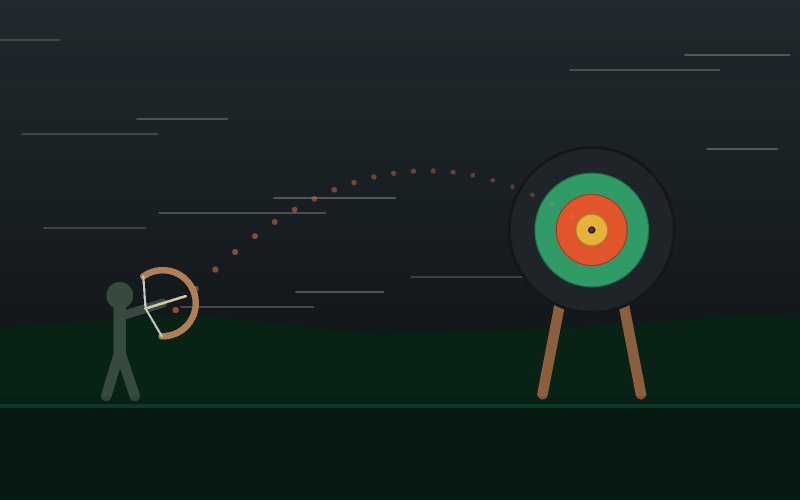
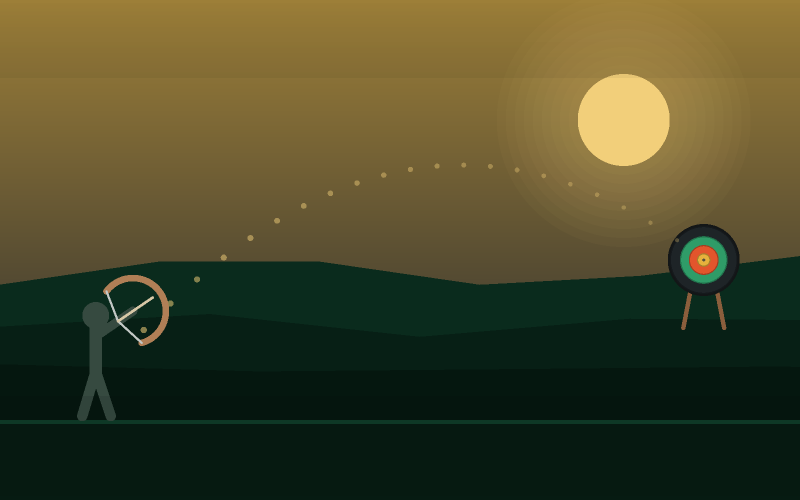
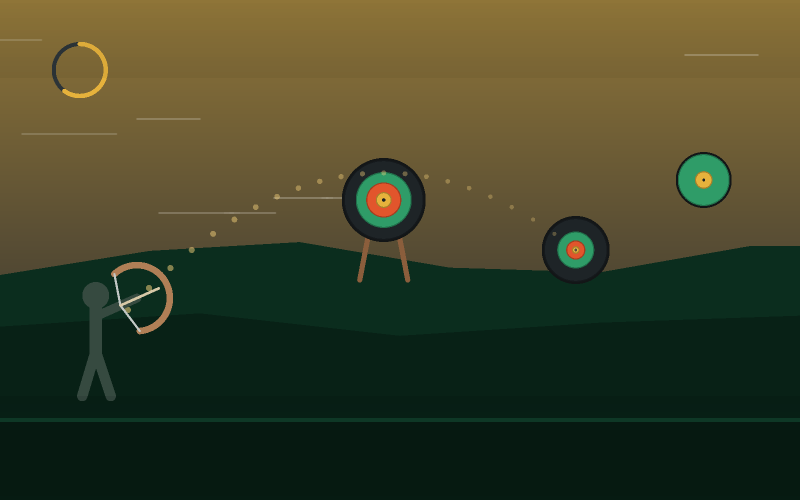
Most games in this category draw a dotted preview while you draw. It runs the same integration the real arrow uses, so it is exact rather than approximate - if the preview lands short, so will the arrow.
The harder games fade the preview toward its end, which marks the region where small changes in your draw produce large changes in the landing point.
Tips for this category
- Change one variable at a time after a miss. Adjusting angle and power together teaches you nothing.
- Aim into the wind, never with it.
- Shoot flatter and faster in strong wind - less flight time means less drift.
- Uphill shots need more power, not just more angle.
- Around forty five degrees gives maximum range, but a slightly flatter shot is usually easier to judge.