About Mountain Archer
Elevation changes the arc, not the aim
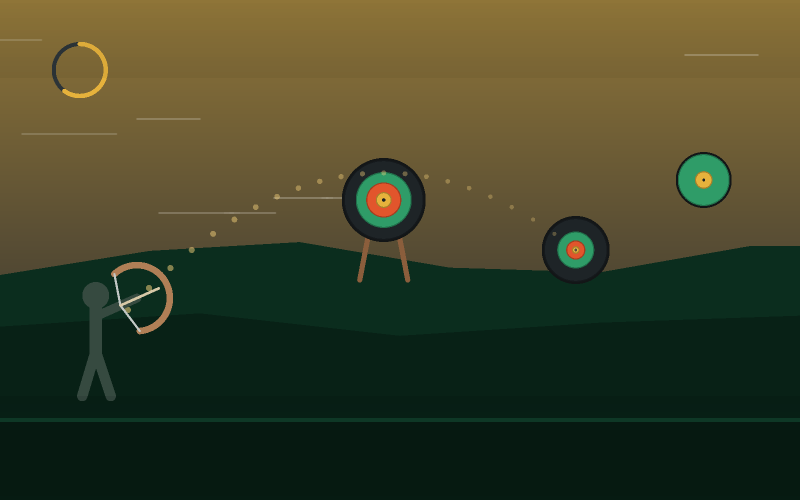
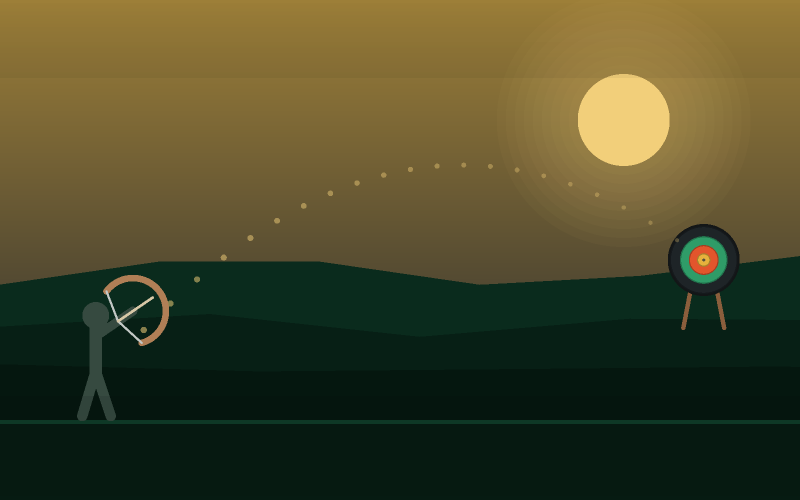
Shooting at a target above you means the arrow spends longer climbing and arrives with less horizontal speed - so it needs more power than a level shot at the same distance. Shooting downhill is the opposite: less power, and the arrow arrives fast and flat.
The common error is to compensate with angle alone. Angle changes where the arrow points; power changes how far it gets. Uphill shots need both.
One wind per stage
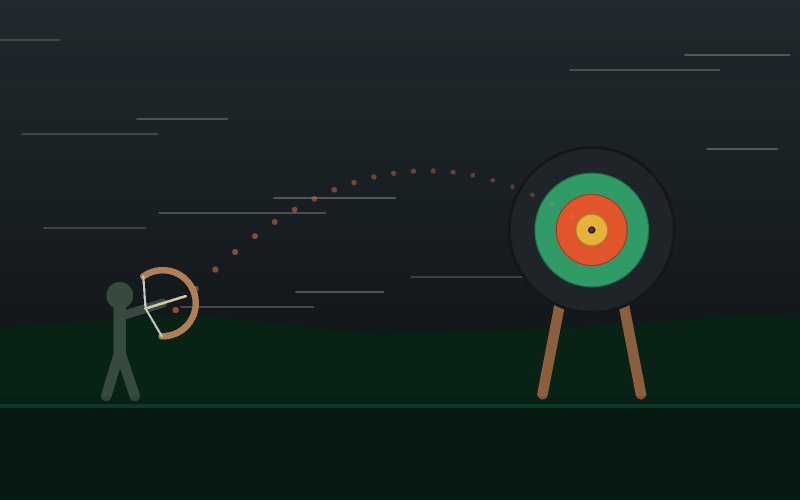
Unlike Wind Archer, the wind here holds steady for all six arrows of a stage. That is a completely different challenge: instead of re-reading conditions each shot, you get one condition and six chances to dial it in.
The first arrow of a stage is therefore a ranging shot. Deliberately taking a low-percentage first shot to learn the drift is usually better than guessing five times.
Six arrows, five stages
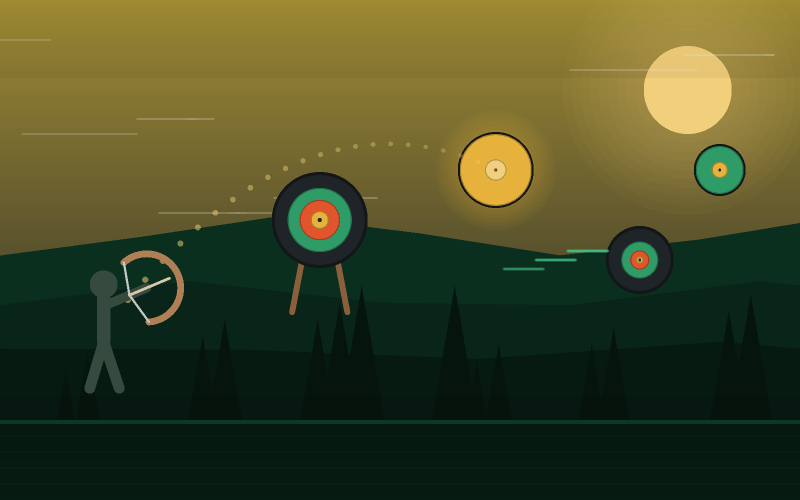
Each stage has a fixed layout with three targets - one easy, one awkward, one that requires clearing a peak. You do not have to hit all three; you have to score enough to advance.
Unused arrows carry into the next stage, which makes an efficient stage genuinely valuable. Stage five is close to impossible without a couple of banked arrows.
How to play
- Check the wind meter - it holds for the whole stage.
- Drag back to set angle and power, then release.
- Use your first arrow to range the wind if you are unsure.
- Score enough to clear the stage and advance.
- Unused arrows carry forward.
Controls
| Where | What to do |
|---|---|
| Desktop | Click and drag to draw, release to shoot |
| Mobile / tablet | Touch and drag, lift to shoot |
| Pause | Escape or the pause button |
Scoring
Points are awarded by which band of the target you hit, multiplied by your combo multiplier where the game uses one.
Tips
- Spend the first arrow of each stage learning the wind. It pays for itself immediately.
- Uphill shots need more power, not just more angle.
- Carry arrows forward wherever you can - stage five is built assuming you have two or three spare.
- Aim into the wind, and remember a lofted shot drifts far more than a flat one.
- The peak-clearing target is worth the most. Take it once you have the wind measured, not before.
Common mistakes
- Guessing the wind for all six arrows instead of ranging with the first.
- Adding angle for an uphill shot without adding power.
- Lofting into a strong crosswind, which multiplies the drift.
- Spending every arrow every stage and arriving at stage five with nothing banked.
Features
- Elevation-based targets across mountain gaps
- Per-stage constant wind with a visible meter
- Arrow budget that carries between stages
- Five fixed, learnable stage layouts
- Local best score and furthest stage